
What is Reflexology?
Reflexology is one of the world’s oldest recognised complementary therapies. It is based on the theory that the organs, glands, systems and structures of the body have corresponding reflex points mirrored on the hands and feet, which basically form a map for the reflexology therapist to work on.
Using gentle but specific finger and thumb techniques to apply pressure to these reflex points, the therapist can help the whole body to restore and maintain balance and harmony, re-tuning and encouraging the body’s own healing systems to activate. It can induce a feeling of deep all-over relaxation during the treatment itself and, as the effects of reflexology are cumulative, can be beneficial in easing symptoms of many illnesses, injuries and conditions over a number of treatments.
How does Reflexology work?
The human body is a miracle of structures, pathways and interconnecting systems all working together to keep us not only functioning but, hopefully, thriving. However, just like a dam across a stream can cause problems both by backing up the water behind it and cutting off the water below it, any congestion in our own systems can cause a knock-on effect that can lead to many different symptoms.
Reflexology works on the principle that the whole body, from head to toe, is connected. This connection is represented by ten zones that run the length of the body and are most easily accessible via the feet, where over 7,000 nerve endings can be stimulated. If the therapist detects any imbalance or congestion in one of the reflex points within a zone on the foot, they will spend some time working that reflex until the congestion has eased or the blockage has dissipated. By relieving the congestion in that reflex, the whole zone can then begin to work in harmony again, just like the stream can flow properly once the dam has been removed.
If the body is once again in harmony and balance, this aids the natural healing processes and helps us to function at our optimum best.
What can Reflexology help with?
It is hard to deny that the current situation in the world has caused an underlying hum of anxiety that has affected many of us. Stress and anxiety are major contributors to many illnesses and conditions, and by reducing the effects of this anxiousness we can prevent more serious issues developing.
Reflexology induces deep relaxation which itself can have a very positive effect on the central nervous system, calming the body and relaxing the mind. This in turn can be hugely beneficial in easing symptoms related to stress and anxiety and other conditions.
Since reflexology helps the body to activate its own natural healing processes, many different issues can benefit from the treatment, resulting in;
- Increased circulation
- Boosted immunity
- Reduced anxiety and depression
- Increased energy
- Improved sleep patterns
- Faster recovery from injuries
- Calming of digestive problems
- Easing of muscular tensions
- Reduced headaches and migraines
- Improved lymph drainage
- Relief of sinusitis symptoms
Is Reflexology suitable for someone living with cancer?
As a complementary therapy working alongside conventional medicine, this non-invasive treatment is one of the most popular types of complementary therapies for people who have had cancer or are currently living with cancer. Apart from giving valuable “me-time” in a non-medical environment, reflexology has shown to be of help with many of the side effects of cancer treatments, with benefits that may:
- Relieve nausea
- Reduce anxiety
- Help with constipation
- Reduce pain
- Improve sleep
- Lift mood and give a feeling of well-being
Oncology reflexology ensures that the treatment can be adapted and tailored to suit individual needs and circumstances both in terms of the pressure techniques used and the length of the treatment session.
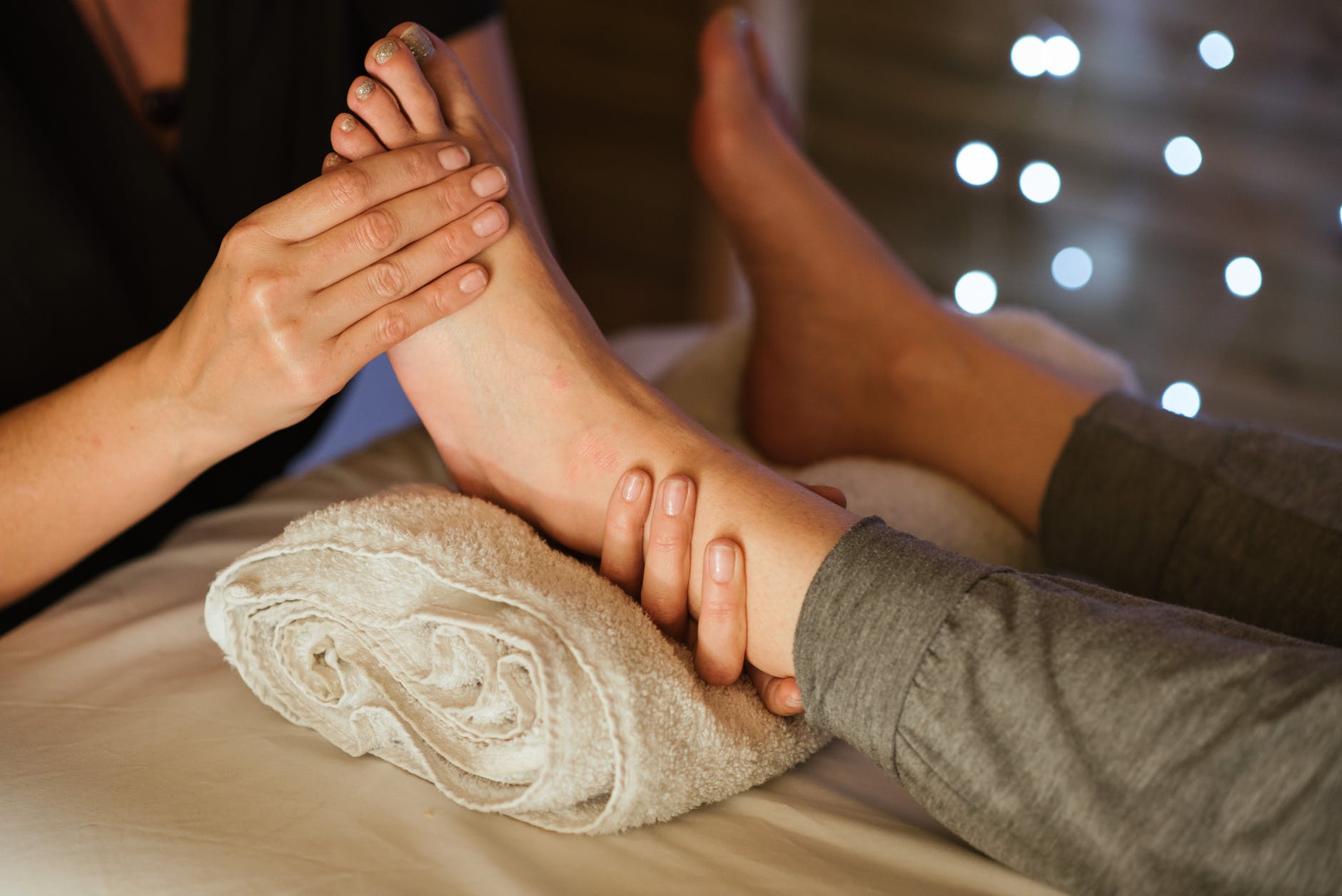
What happens in a Reflexology treatment?
Before your first treatment begins, as a new client you will have a full consultation and complete a questionnaire to help the therapist decide on the best treatment plan tailored to your needs. This is a great opportunity to ask questions and discuss your expectations. You will then make yourself comfortable on a treatment bed, with just socks and shoes removed, covered with a blanket. Your therapist will sit facing the soles of your feet to complete the treatment. A full treatment on both feet can last from 45 mins to 1 hr and yes, people often find that they fall into a light sleep which is proof of how relaxing it can be! At the end of your session you will receive some after-care and home-care advice to help you maintain the benefits of the treatment.
As all reflexology treatments are tailored to suit the individual, sometimes the treatment time may be less or the consultation time may be slightly more, it should always be the needs of the client that dictate.
Is Reflexology suitable for everyone?
Reflexology is a gentle, non-invasive natural treatment and is generally considered to be a safe complementary therapy for most people.
However, there are some instances when it is contraindicated. A contraindication is any symptom or condition that renders performing a reflexology treatment unsafe for either the client or therapist.
 Step by Step Reflexology